An imperial city at the foot of the Atlas Mountains, gateway to the desert and a crossroads between Africa, Europe and the Arab world, Marrakech draws millions of travellers every year. Before you book your riad and your flights, here's what you need to know to plan a great trip.
Why Marrakech captivates so many travellers
Marrakech owes its nickname "the Red City" to the ochre pisé ramparts and façades that encircle its historic medina, a UNESCO World Heritage Site since 1985. Visitors come for the buzz of the souks, the serenity of its gardens, the richness of Andalusian and Saadian architecture, and the Moroccan hospitality that riads are famous for. Within a few hours you can go from the labyrinthine lanes of the medina to the wide avenues of Guéliz, the new town, before heading out toward the foothills of the Atlas Mountains.
When to visit Marrakech
Marrakech has a semi-arid climate: summers (June to August) are hot and dry, with temperatures frequently above 35°C. Spring (March to May) and autumn (September to November) are generally considered the best seasons, with mild, sunny days ideal for exploring the medina, visiting gardens or heading out on a day trip to the Atlas. Winter stays pleasant during the day, with cooler nights — especially noticeable in riads with open-air courtyards.
Historic medina or new town?
Marrakech is really two different worlds. The medina, the historic heart enclosed by ramparts, concentrates the souks, the landmark monuments and most of the traditional riads: you get around on foot, through a maze of lanes mixing craft workshops, small shops and unassuming houses hiding genuine havens of calm. Guéliz and Hivernage, the new town built during the French protectorate era, bring together modern shops, restaurants and contemporary buildings. Many travellers choose to stay in the medina for the authenticity, with a short trip to Guéliz for a change of pace.
Getting around the city
Inside the medina, walking is king: the lanes are pedestrian-only and often too narrow for cars. To reach another district or the airport, the petit taxi (usually beige in Marrakech) is the most practical and affordable option. Horse-drawn calèches offer a pleasant, if more touristy, ride around the ramparts. It's best to avoid renting a car if you're staying in the medina — the lanes simply aren't built for it.
Where to stay: a riad in the medina or a modern hotel?
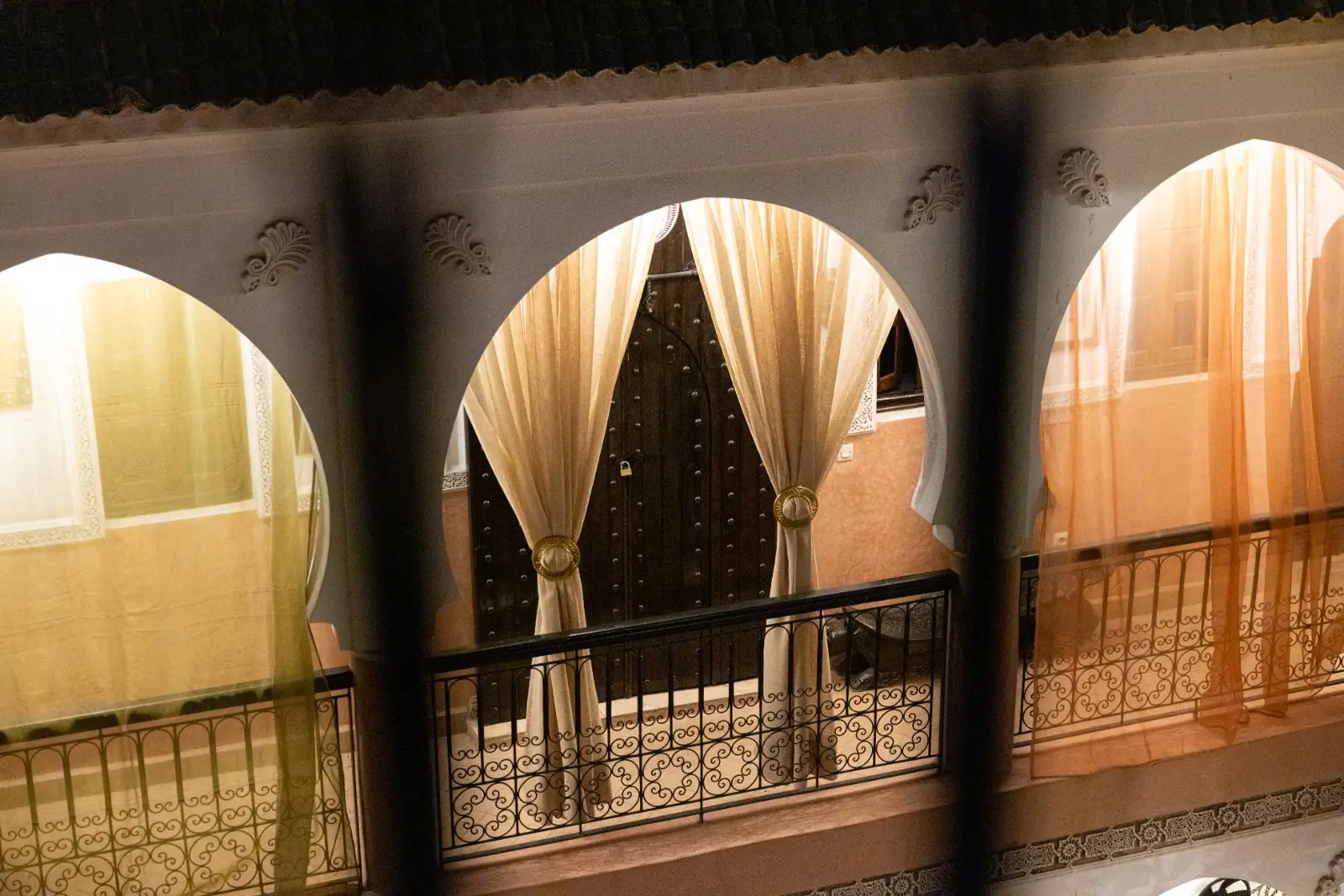
This is one of the choices that shapes a Marrakech trip the most. A traditional riad — a historic house built around an interior courtyard — offers an authentic, immersive stay away from the busiest tourist areas, with the kind of personal welcome only a family-run guesthouse can give. That's the choice behind Riad Davina, tucked away in the Bab Ghmat neighbourhood, 15-20 minutes on foot from Jemaa el-Fna square. Learn more on our The Riad & Marrakech page or browse our rooms directly.
Sleeping in a medina riad means living the contrast between the buzz of the lanes outside and the quiet of a traditional Moroccan courtyard within.
The must-sees
Jemaa el-Fna square, the souks, the Majorelle Garden, the Bahia Palace, the Koutoubia... Marrakech is full of places to explore. We've put together a full guide to the best places to visit in Marrakech, plus a practical guide covering budget, language, currency and local customs.
Ready to experience Riad Davina?
Check availability and book your stay in the heart of Marrakech's medina.